The Falklands Islands are located in the South Atlantic Ocean, approximately 300 miles east of the southern coast of Argentina.
The History of the Falkland Islands
For hundreds of years, the Falklands have been occupied by various countries, including France, Spain and the United Kingdom. The British first arrived in 1690, but left the islands uninhabited until the 1700s. The first actual settlement was by the French in 1764.
The Spanish formally took control in 1767, and maintained their presence until 1811. Following an unsuccessful attempt in 1824, a small Argentine settlement was founded in the Falklands in 1826. However, Britain reasserted control in 1833 and the islands were governed by the British, alongside South Georgia and the South Sandwich Islands into the 1980s.
After WW2, most of the world was decolonising and the Argentinian Government expected the British Government to hand over control of the Falklands to Argentina.
In 1965, the United Nations issued resolution 2065, recognising the sovereignty dispute. However, the Falklands population were mainly of British origin and didn’t want to be governed by the Argentine Government or decolonised.
From 1976 up until 1983, the Argentine Government was led by a right wing, authoritarian government, essentially a military dictatorship, which severely punished those who were deemed an enemy of the state.
During this time period the British Government did try to negotiate with the Argentine Government to come up with a solution. However, efforts broke down and a diplomatic solution was never reached.
When Did The Falklands War Start?
President Leopoldo Galtieri of Argentina decided to take the Falkland Islands by force. On 2nd April, 1982, Argentina invaded the Falkland Islands, followed by South Georgia and the South Sandwich Islands. The main British task force of warships had to sail 8,000 miles to reach the warzone.
British Prime Minister Margaret Thatcher approved a military campaign, codenamed Operation Corporate, to recapture the territory. Naval warships, submarines, aircraft, and civilian merchant ships packed with soldiers headed towards the Falklands.
During the occupation, The Falklands population faced severe restrictions, as occupying forces forcibly deported some residents and detained others.
Casualties and Injuries
The Falklands War only lasted 74 days, but over 900 lives were lost during the conflict.
255 British service personnel1 died during the Falklands War campaign. A total of 25,948 UK Armed Forces personnel1 served in the Falklands War.
A further 777 British service personnel2 were injured while serving in the Falklands. Types of injuries included severe burns, head injuries, gunshot wounds, and in the most severe cases, the loss of limbs, impaired hearing and the loss of eyesight.
The Argentine Government announced 649 Argentine lives had been lost3, approximately half of them lost their lives in the sinking of the ARA General Belgrano, an Argentine Navy light cruiser, sunk by a British nuclear submarine.
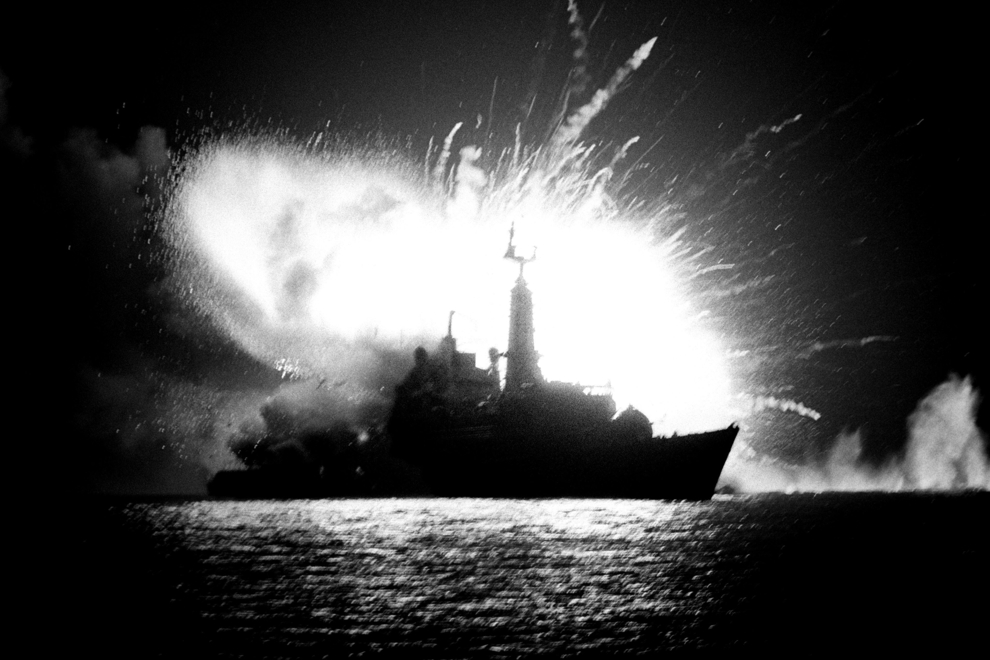
One-third of British casualties4 were the result of attacks on British naval ships.
On the British side, the largest loss of life was also at sea. 48 lives were lost when RFA Sir Galahad was struck by Argentine Jets, setting the ship ablaze.
Warfare
On 2nd May, a British nuclear-powered submarine torpedoed and sank the General Belgrano, an Argentine cruiser originally bought from the United States.
Meanwhile, the British faced vulnerability due to its reliance on just two aircraft carriers. A shortage of adequate air cover also left the fleet highly exposed. As a result, on 4th May, the Argentine forces used an Exocet missile on the British destroyer HMS Sheffield, which sank six days later, on 10th May.
On 23rd May, HMS Antelope was hit by two unexploded bombs. Blesma Member, John Phillips was a Royal Engineers Bomb Disposal Officer in the Falklands. He and his team were tasked with the dangerous mission of defusing the bombs. While carefully trying to defuse a bomb, it exploded, severing his left arm and killing his comrade, Staff Sergeant Jim Prescott.
I was thrown through the air. We were both hit by one of the hatchway doors being blown off.
The explosion set HMS Antelope ablaze. The ship’s captain ordered crew members to abandon ship. The next day, 24th May HMS Antelope sank.
As a result of his severe injuries, John had his left arm amputated. He was later awarded the Distinguished Service Cross. His comrade Staff Sergeant Jim Prescott was awarded the Conspicuous Gallantry Medal.
John shares his harrowing experience onboard HMS Antelope:
How The Falklands War Ended
The conflict came to an end after intense combat in the mountains above Port Stanley, as British forces closed in on the Argentines. On 14th June 1982, a ceasefire was agreed and the Argentine forces surrendered.
The Falklands War Legacy
Although the Falklands War spanned just 74 days, its repercussions profoundly reshaped British-Argentine relations and triggered a major overhaul in British defence spending.
Domestic Triumph and the Thatcher Legacy
The return of British vessels was met with widespread public celebration, providing a massive lift to national morale. London hosted an official victory parade, and serving members of the British military and civilians who participated in the conflict were awarded the South Atlantic Medal. Politically, the enduring legacy of the conflict became linked with Prime Minister Margaret Thatcher.
Military Evolution
The Falklands War served as a critical learning experience for the British Armed Forces, particularly the Royal Navy.
The Royal Navy implemented new protocols to better protect its surface ships from vulnerabilities exposed during the fighting. There was also new funding and prioritisation of the Royal Navy’s submarine arm.
Medical Care
Both sides experienced long-lasting psychological and physical injuries. According to the UK Government, at least 30 British service personnel2 and civilians lost a major limb as a result of the Falklands conflict.
Former Paratrooper Denzil Connick was a 25-year-old Lance Corporal in an anti-tank platoon during the Falklands War. He lost his left leg at the hip and severely damaged his right leg when he was hit by a mortar round on 13th June 1982.
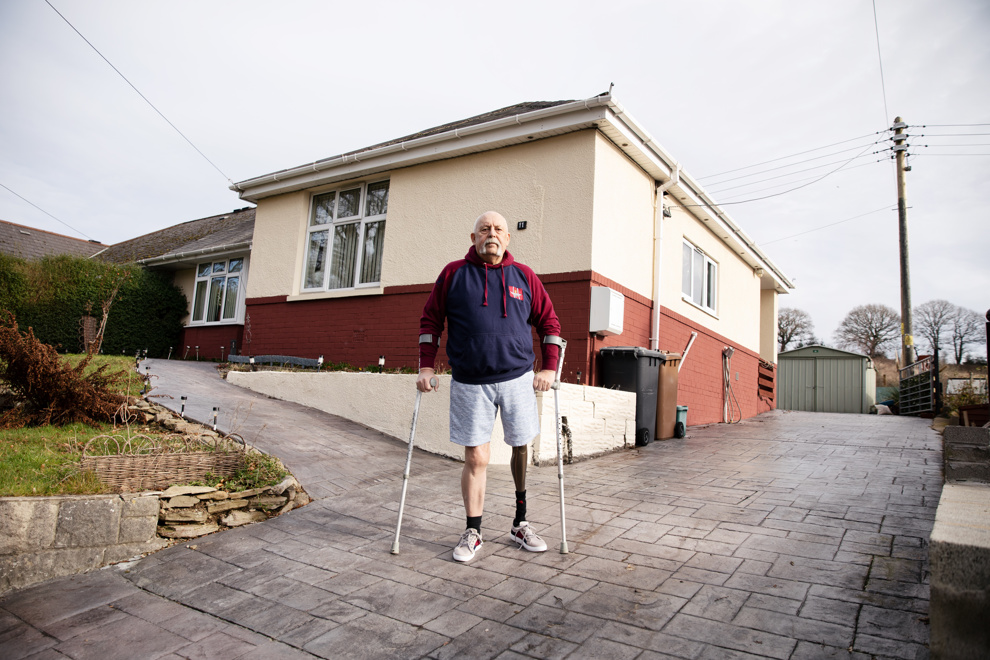
“The Association was in touch almost straight away after I was injured. I spent months in the Queen Elizabeth Military Hospital in Woolwich when I came home, and I remember someone coming to see me and the other amputees there. I wasn’t mentally geared up to ask for help back then, but it was good to know Blesma was there.
“It takes a while to sort out how you react to these things and everyone is different. You’ve experienced life-changing injuries that bring huge implications to your future, and it takes some time to move on. Blesma is very good at understanding that and being there when needed.
“Over time, the Association has helped with decorating and gardening grants which have been much appreciated, and Blesma helped with a big project to sort out my driveway which was basically a farm track that made access to my house difficult. It meant so much to get that done. But a really important hallmark of Blesma is knowing that support and camaraderie are always there. The help goes way beyond simply offering financial support.” – Denzil Connick
In the wake of the war, the bond between the Falkland Islanders and the United Kingdom strengthened, with the British Government granting the islanders full British citizenship and providing substantial aid to rebuild their communities. This deep loyalty to the UK was demonstrated in a 2013 referendum, where an overwhelming 99.8% of the population voted to retain their political status as a British Overseas Territory.
The United Kingdom still maintains a permanent military garrison on the Falkland Islands to this day.
Our Falklands War veteran members receive vital assistance from Blesma after their injuries and for the rest of their lives.
If you would like to support our work at Blesma, your donation can make a significant difference to improving the lives of veterans.
Header image: © Graham Colbeck (FKD 2776)
Source: History of the Falklands - The Falkland Islands Association
1Source: Gov UK - Falklands official statistics released
2Source: UK Parliament - Falkland Islands (Casualties)
3Source: Britannica - The course of the conflict
4Source: Imperial War Museum Falklands Conflict Aftermath
We can help
We are dedicated to assisting serving and ex-Service men and women who have suffered life-changing limb loss or the use of a limb, an eye or sight. We support these men and women in their communities throughout the UK. Click the link below to find out the different kinds of support we offer.
Get Support