Why did you decide to join the British Army?
It was my father’s dream for one of his three sons to join. In life, you need something to aspire to, and joining the British Army in Nepal is very difficult; more than 10,000 people compete for a place every year, but only about 150 people are selected. I didn’t really expect to be successful, as lots of people in Nepal try many times and fail, but I passed first time. I joined 1st Battalion The Royal Gurkha Rifles in 1999.
Did you travel to many countries?
I’ve been to quite a few countries on exercise, and I have served on operational tours in Bosnia, Kosovo and Afghanistan. I was blown up on my first tour in Helmand Province.
Can you tell us a bit about what happened that day?
It was in 2010, some time in the afternoon. We had been given a mission and had just left the base to go out on patrol. I was walking through the fields when I stepped on an IED and lost both my legs. I looked down at my legs and my right one wasn’t there at all. I still had my left leg but it was really badly injured – the bones were completely shattered – and it was amputated as soon as I was brought back to Camp Bastion.
How did you react to losing your legs?
When I woke up in Camp Bastion, I didn’t have the courage to lift the blanket and look at my injuries. I had often thought that I might die while I was serving, but I never thought that I was going to lose both my legs. Yes, I might get shot, lose one of my limbs, but never both of my legs. I was 32 years old, and suddenly completely lost.
How did you overcome that feeling?
I spent three-and-a-half years at Headley Court. Initially, I found it quite exciting. I think it’s best to go out and challenge yourself. So as well as learning to walk again, I tried lots of sports like skydiving, which I had never done during my service. My logic was that half my body was now gone, so I didn’t need to worry where the other half went! I still had two limbs. I’d lost two but I had other things I could use.
So you stayed strong by pushing yourself?
Yes. Once I landed on the ground safely from that skydive, I thought; ‘Actually, I can do things even though I have no legs. Anything is still possible!’ It gave me back my confidence. After that, my aim was to find out what I could do physically. I thought; ‘I’m a Gurkha, I’m going to fight until my last breath. That’s how I work.’
You were aiming to climb Mount Everest
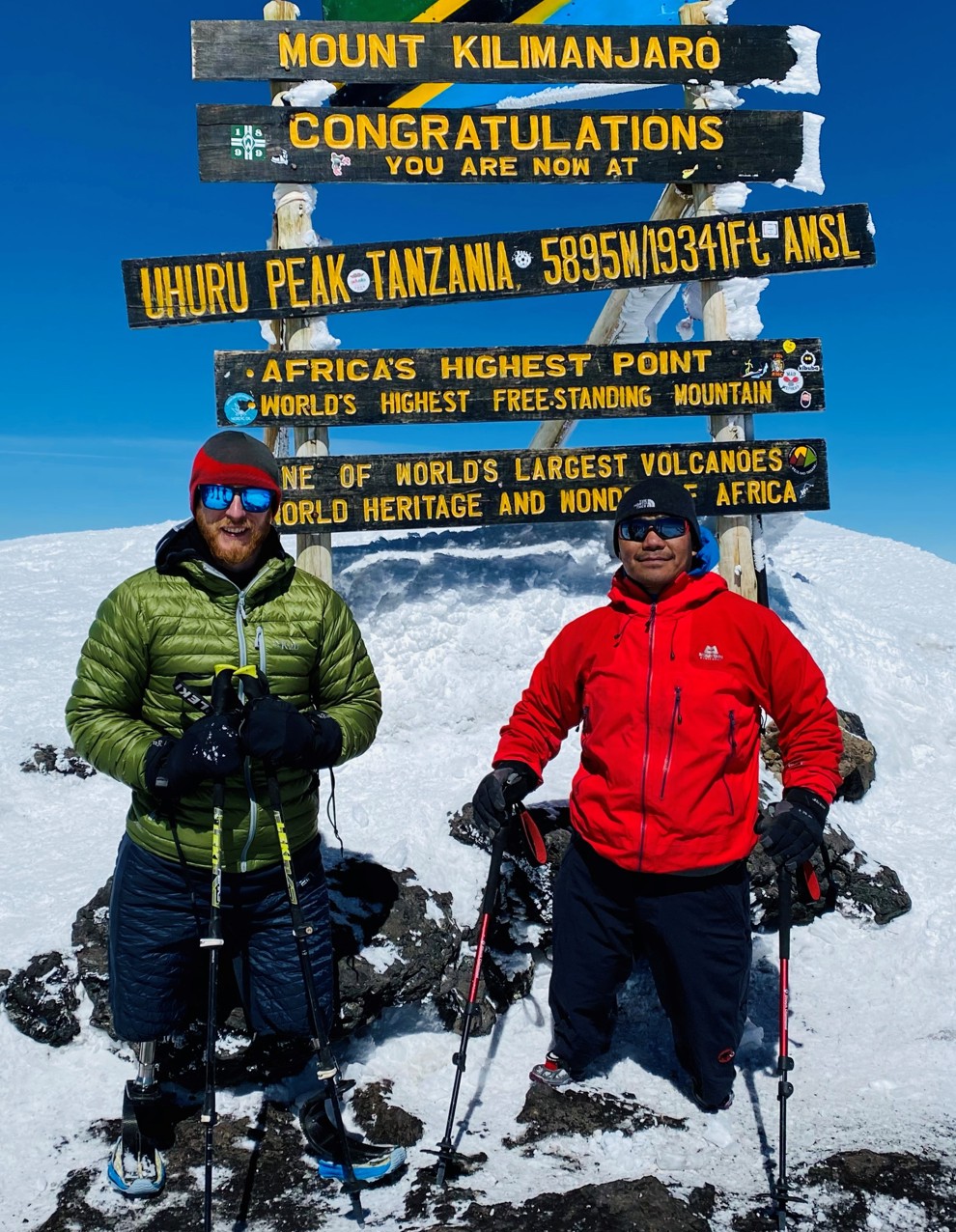
I worked so hard last year to get ready for the climb, and I was actually training on a mountain when I found out that the Nepalese government had banned double amputees and blind people from climbing Mount Everest. You can’t tell someone they can’t do something just because they don’t have legs. It’s about someone’s rights! For about three months I didn’t sleep much. I was fighting not just for my rights, but for the rights of all people with disabilities. I decided this was a bureaucratic mountain that I would have to climb before I could climb Mount Everest! We eventually overturned the rules in March.
We can help
We are dedicated to assisting serving and ex-Service men and women who have suffered life-changing limb loss or the use of a limb, an eye or sight. We support these men and women in their communities throughout the UK. Click the link below to find out the different kinds of support we offer.
Get Support